solo exhibition
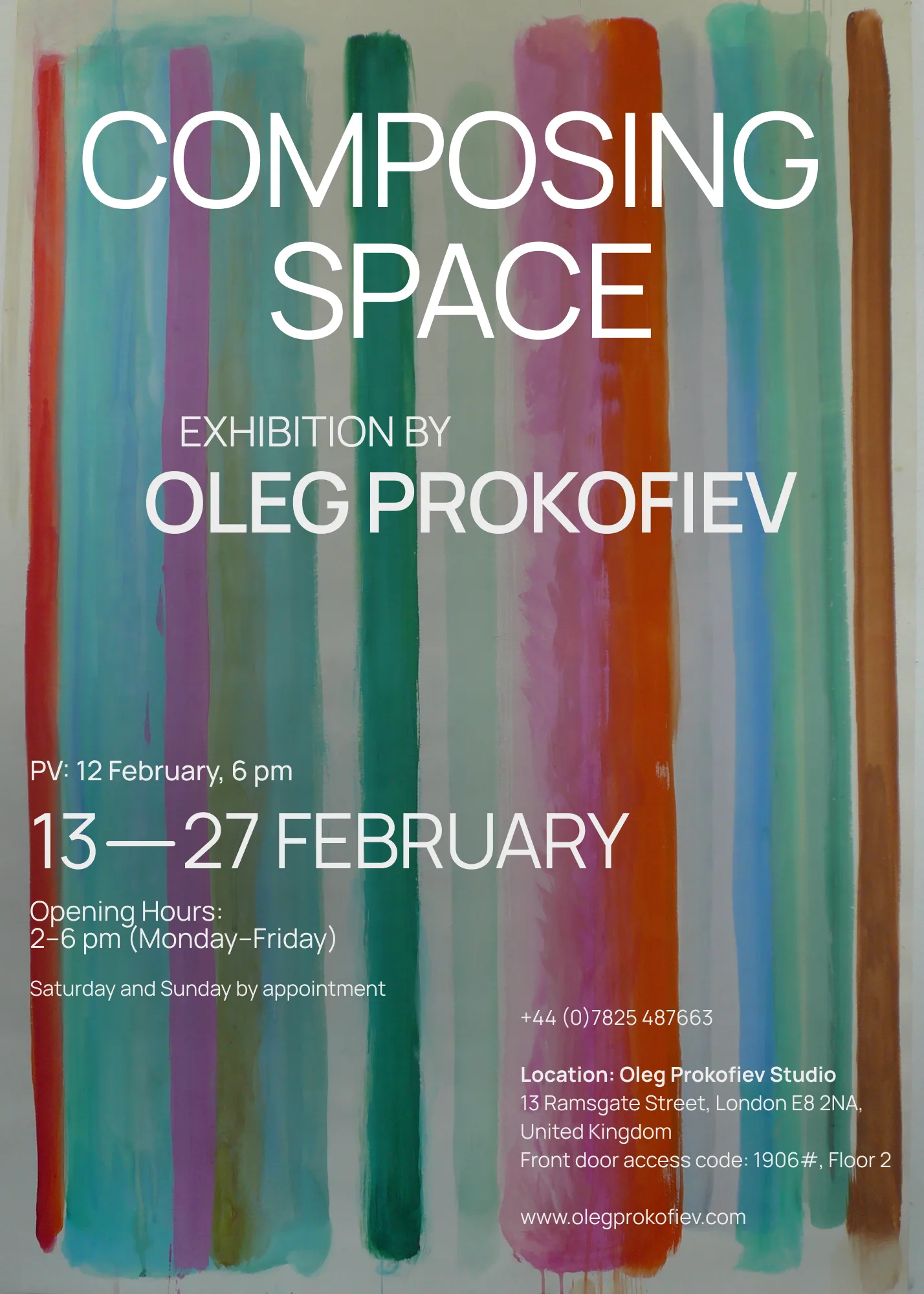
Composing Space
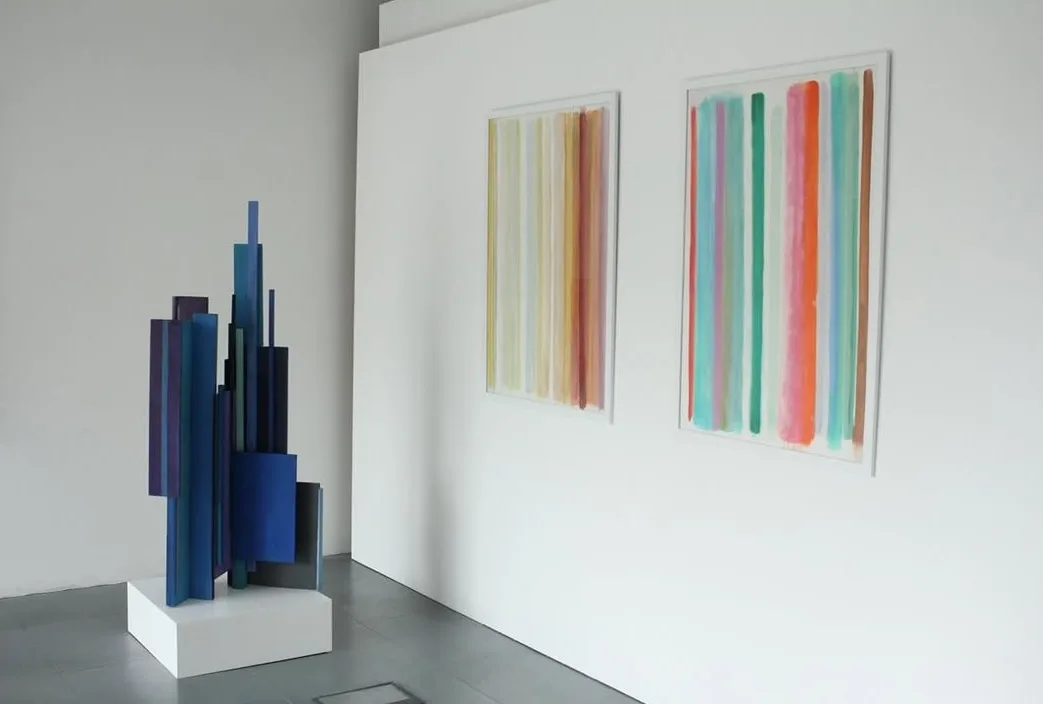
Solo Exhibition by Oleg Prokofiev
Curated by Anzhela Popova
Prokofiev Studio
13 Ramsgate Street, London E8 2FD, United Kingdom
www.olegprokofiev.com
The contemporary art world has historically revolved around three major capitals — New York, London, and Paris. Following the Second World War, however, the balance of artistic power shifted: Paris gradually lost its leading position, while New York began to rise rapidly. This transformation was driven by the influx of artists, collectors, and critics, alongside the emergence of new artistic languages, most notably Abstract Expressionism developed in New York in the late 1940s and 1950s, positioning the city as the birthplace of the first internationally influential American art movement. It was in New York that contemporary art found not only an aesthetic foundation but also a robust market framework.
In the post-war period, particularly from the 1950s through the 1960s, New York became a site for the establishment of key institutions and influential figures. Museums of global significance, including MoMA, founded earlier in 1929 but greatly expanded in influence after 1945, played a crucial role in shaping the narrative of modern and contemporary art. At the same time, the role of galleries and art dealers grew increasingly prominent. As a result, by the mid-twentieth century, New York had firmly established itself as one of the principal centres of contemporary art and the global art market.
This exhibition explores how the city shaped the artistic development of Oleg Prokofiev during the 1970s. At the end of 1971, Oleg moved from Moscow, USSR, to London, England. He was awarded a Gregory Fellowship in painting at the University of Leeds, which provided him with the opportunity to become a full-time artist for the first time in his life. Both the academic environment and the broader artistic milieu of London played a transformative role in shaping his practice.
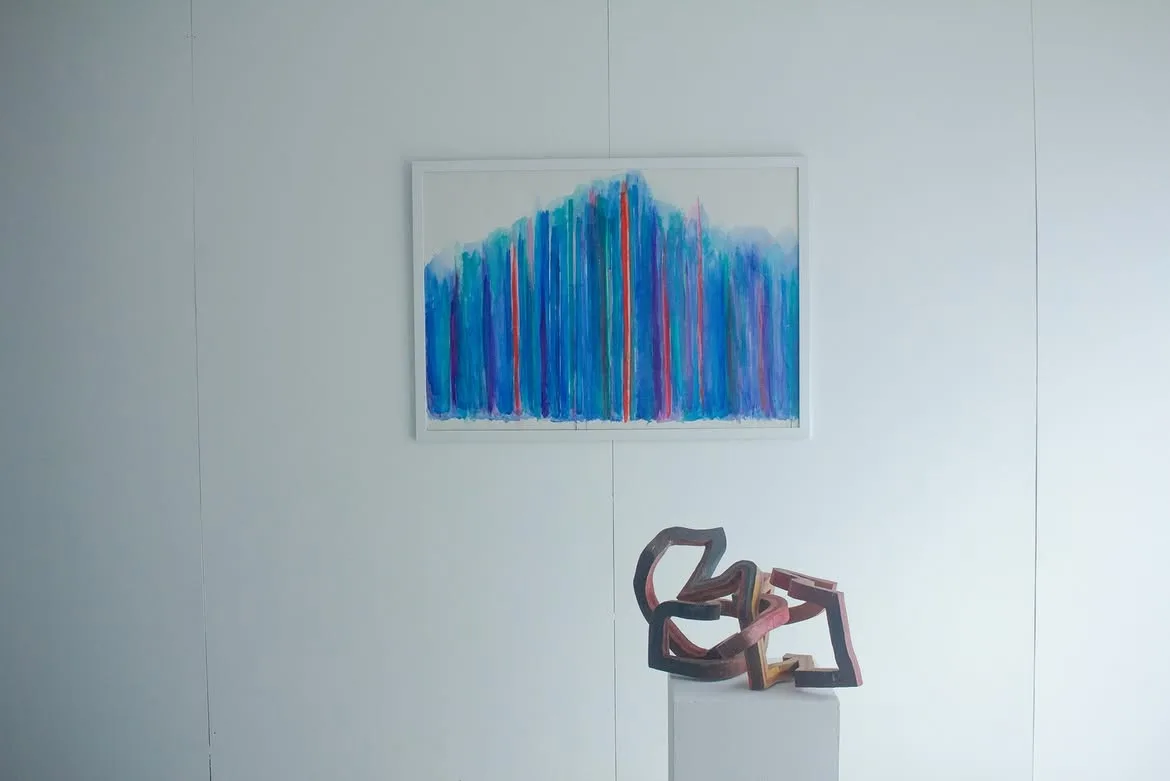
In 1977, Oleg travelled briefly to New York, a visit that proved pivotal in the development of his work. Upon his return, he immediately embarked on a series of Manhattan drawings, titled Stripes. The overwhelming scale of the city — fundamentally non-European in character, defined by its aggressive verticality — fascinated him deeply. The architecture and excitement of New York City were not the only experiences to be had. There were also the MOMA, the Guggenheim, the Metropolitan – all showing contemporary work, especially abstract work, which Oleg had not had a chance to absorb in such impressive displays before: Rothko; Still; Sol de Witt; Motherwell; Barnett Newman; Helen Frankenthaler – all no doubt had their influence and resulted in the reductive, painterly abstraction that culminated in the stripe paintings. In translating these impressions into painting, Oleg began to experiment with stronger, and at times deliberately clashing, colours, leading to an entirely new approach to both painting and drawing. During this period, he produced a series of large and medium-scale works in gouache and acrylic, exploring previously unknown intensities and combinations of colour. These drawings were guided by contrasts, dominated by variations of line and tone. Colour became a key instrument in breaking traditional boundaries between painting, drawing, and sculpture.
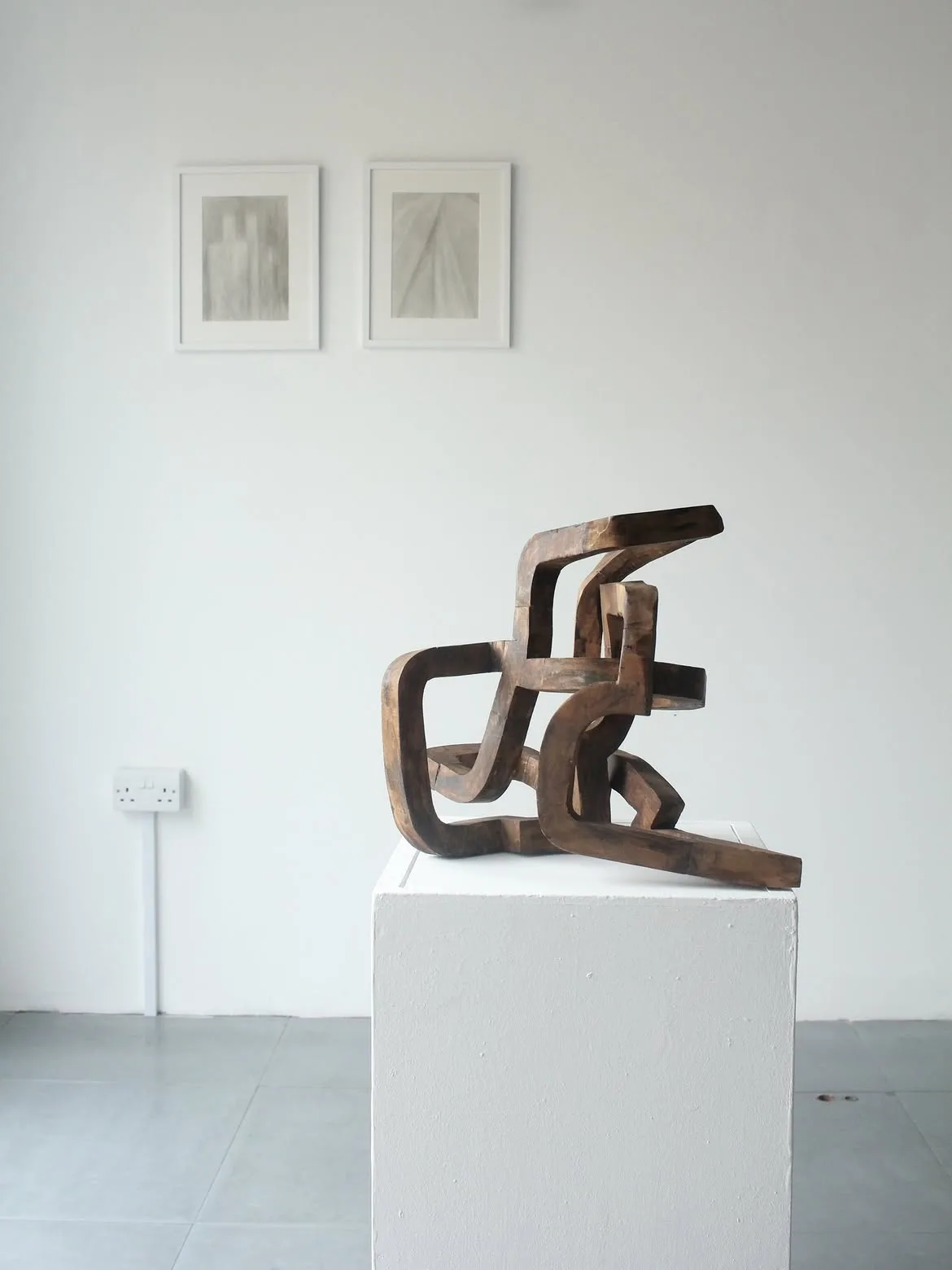
This initiated a period of inventive experimentation and exploration. Oleg began working with three-dimensional objects, incorporating a variety of materials — wood, fragments of metal, and objects often found on the street. His practice shifted from painting and drawing towards relief and sculpture. He described this approach as the principle of “line in space”. By joining cut-out elements from a board, the line could move in any direction, yet one strict rule applied: it must always return to its point of origin. The “line” itself is thick and tangible, most often rectangular or square in section. Despite this material density, the sculptures possess a strong sense of condensed space. It is the dynamic interplay between this internal space and the surrounding environment that ultimately defines the sculptural form as a whole.
Oleg’s abstract drawings and sculptures operate according to a logic akin to musical composition, where rhythm emerges from a balance between order and controlled disruption. Like a composer structuring a work to occupy a predetermined duration, carefully calibrating sound and silence, Prokofiev organises space through deliberate modulation. A finite spatial field is articulated through varying densities of form, constructed from interrelated contrasts of stripes, angles, curves, and loops. Dynamics and pauses are integral to this construction, activating the space and guiding the viewer’s perception through moments of tension and release.
I like the music of the shapes it has no punctuations marks harmony doesn’t falter pauses are not filled and what you hear is one muteness moving imperceptibly Into another the vestments of sounds are thrown off and can be stripped down in layers starting with impulsive shouts - the outer garments then to light whispers of the lingerie down to the nakedness of silence the mystery of unadorned stillness
— Oleg Prokofiev, last selected poems 1990-1998